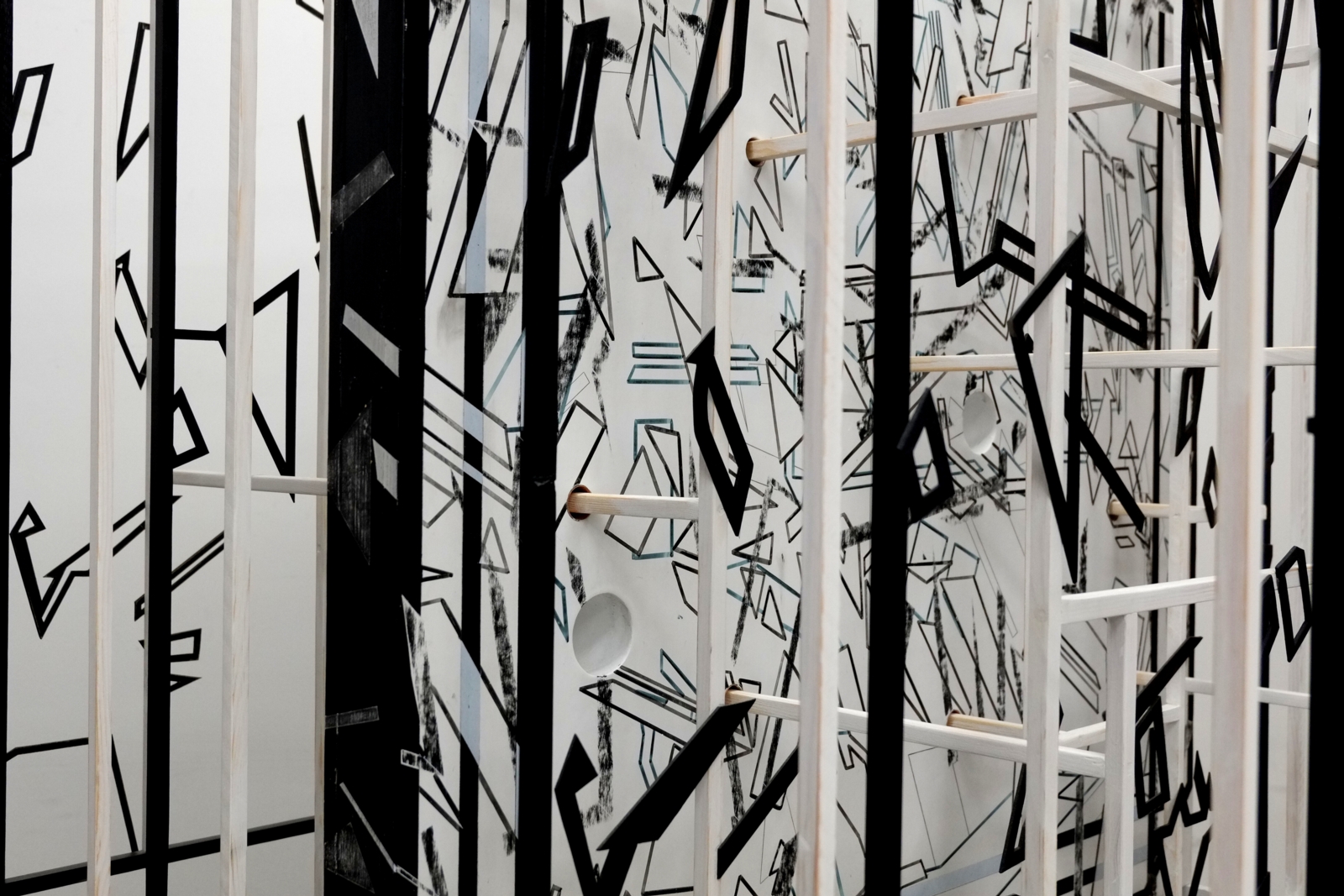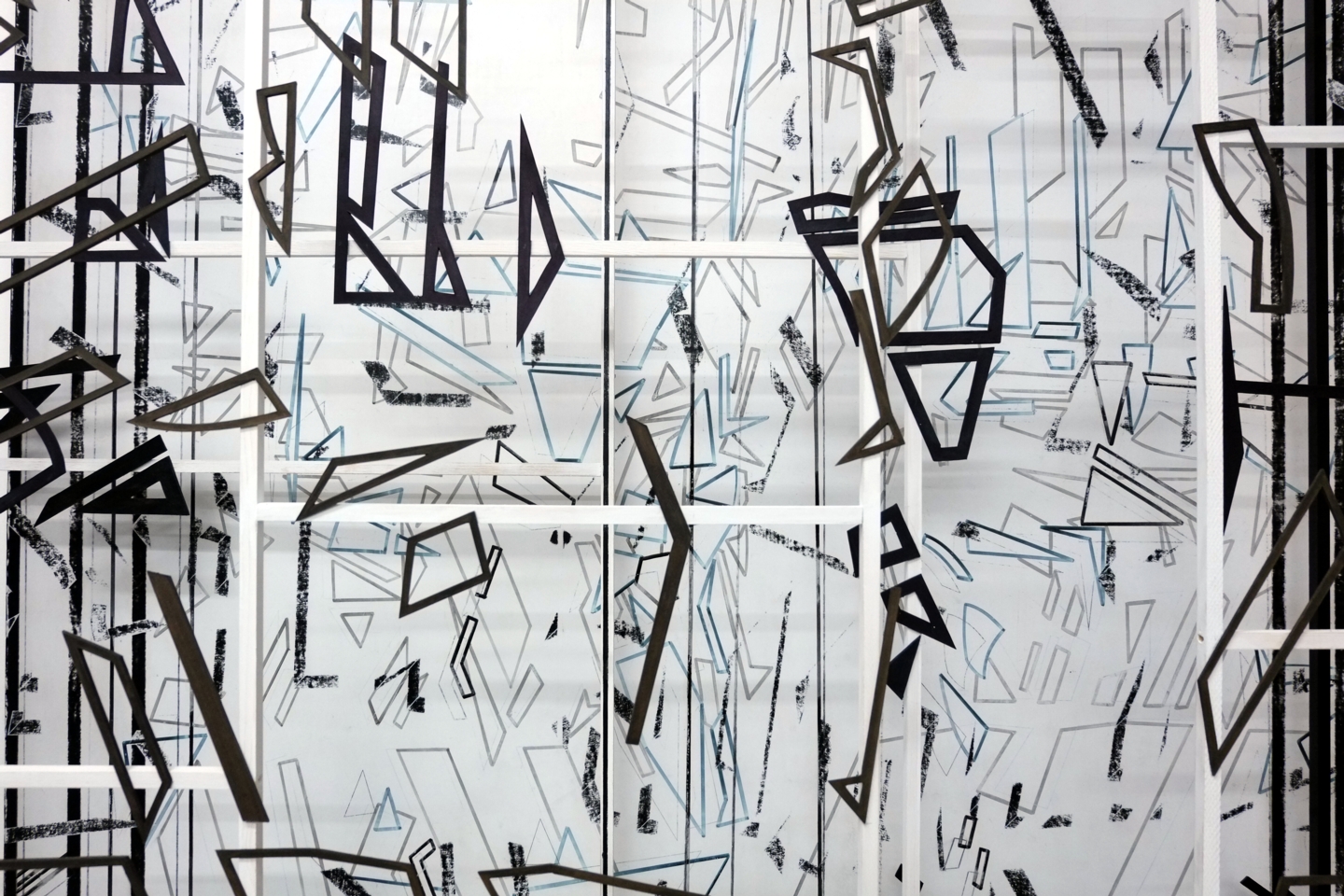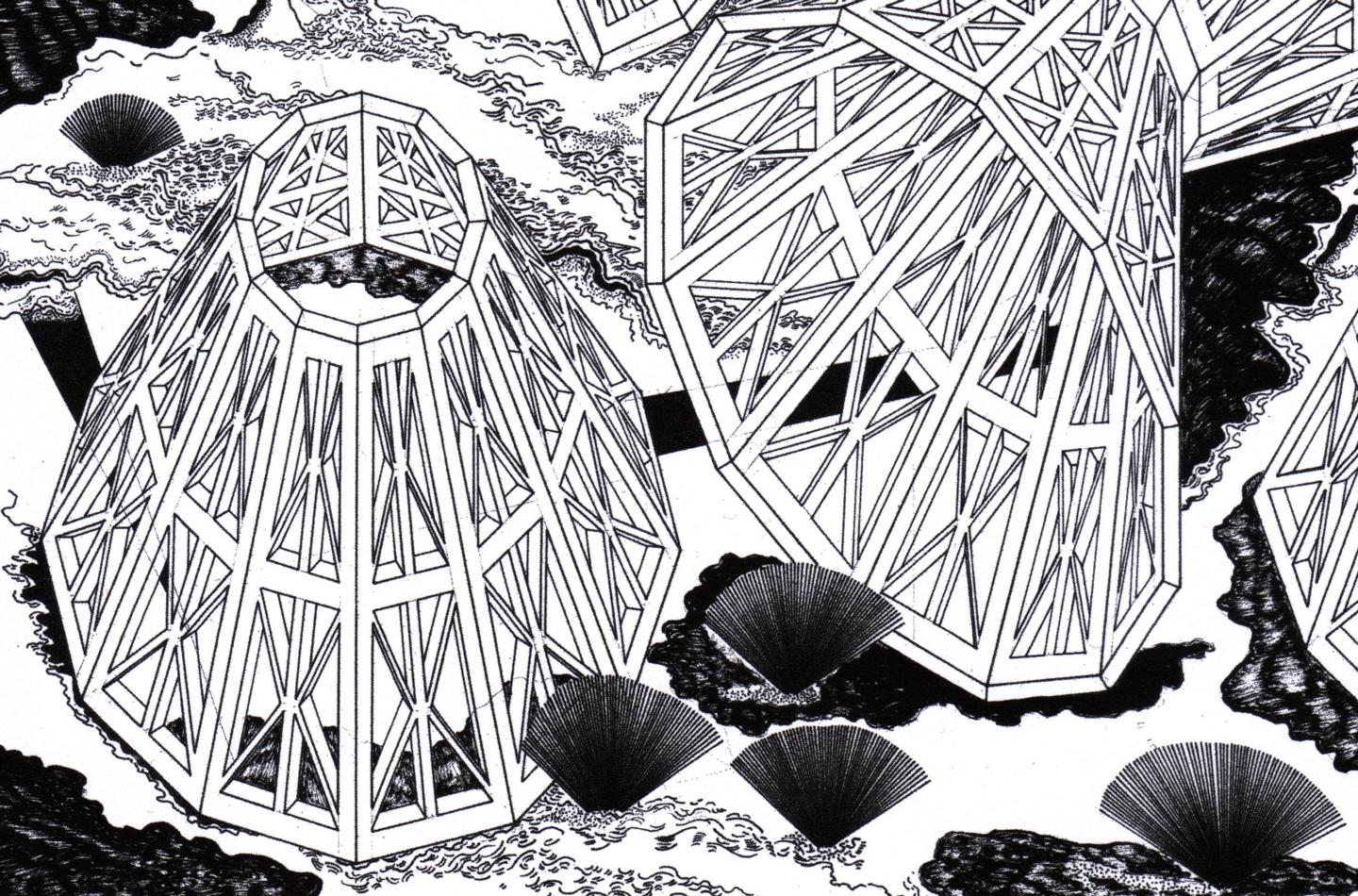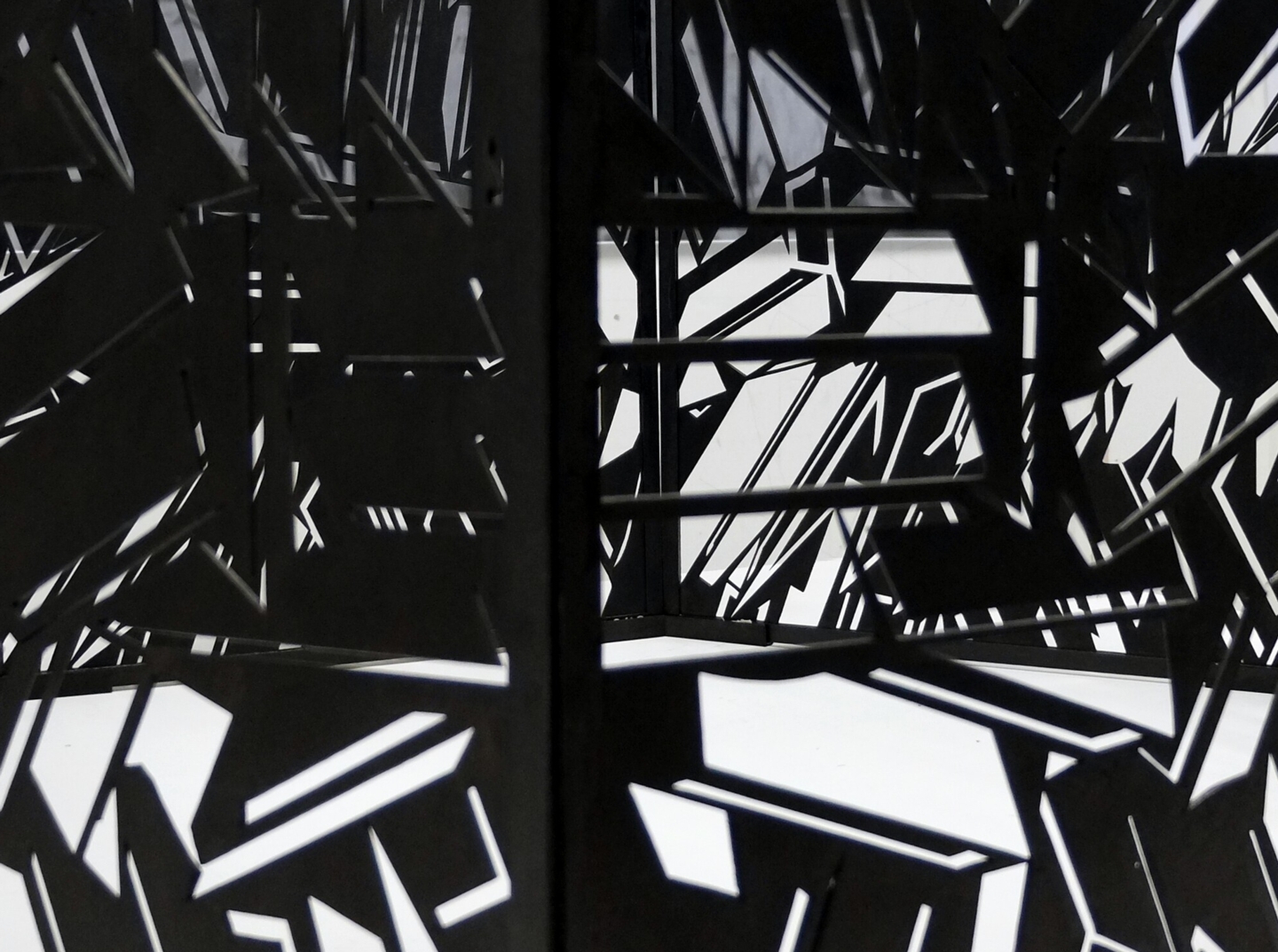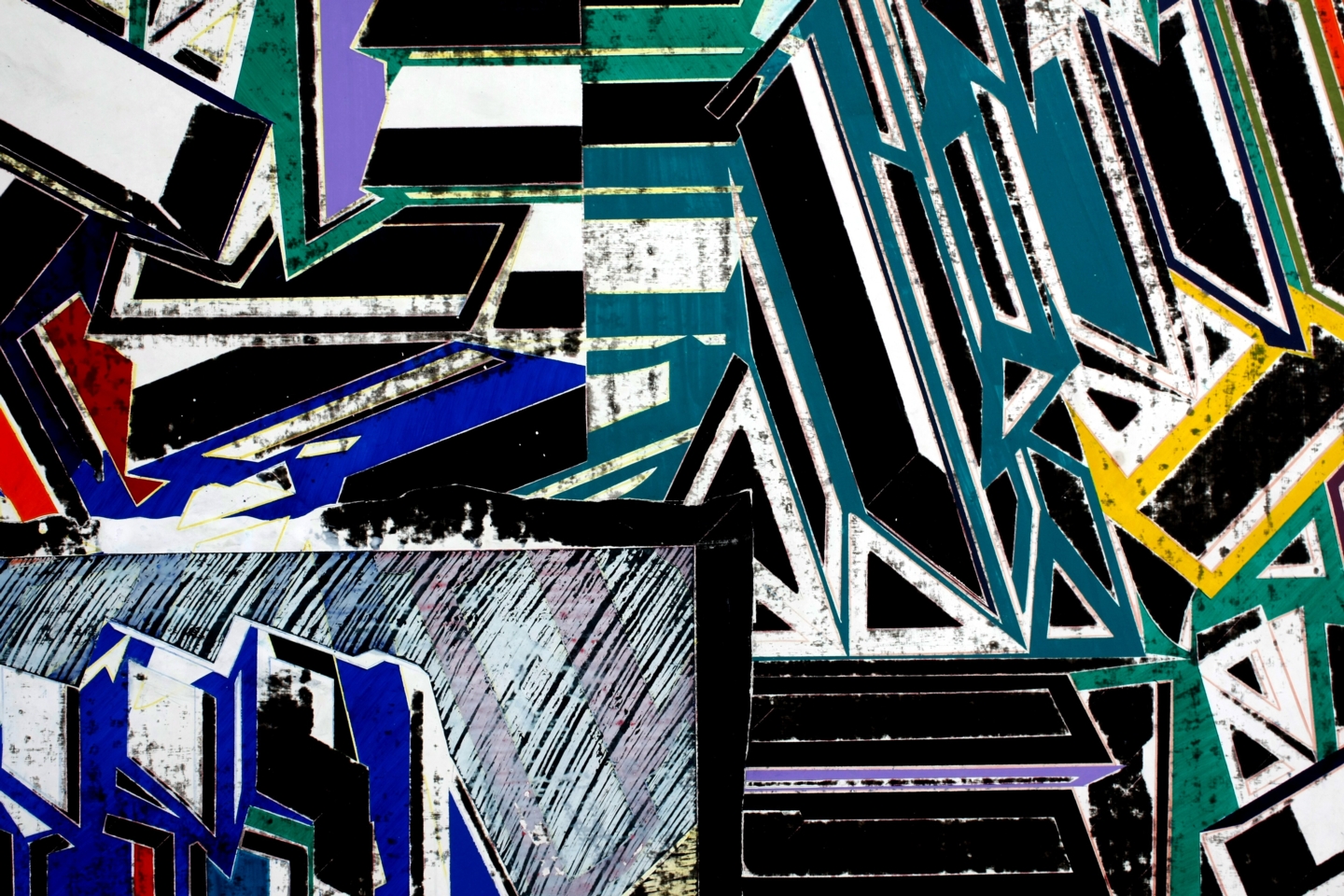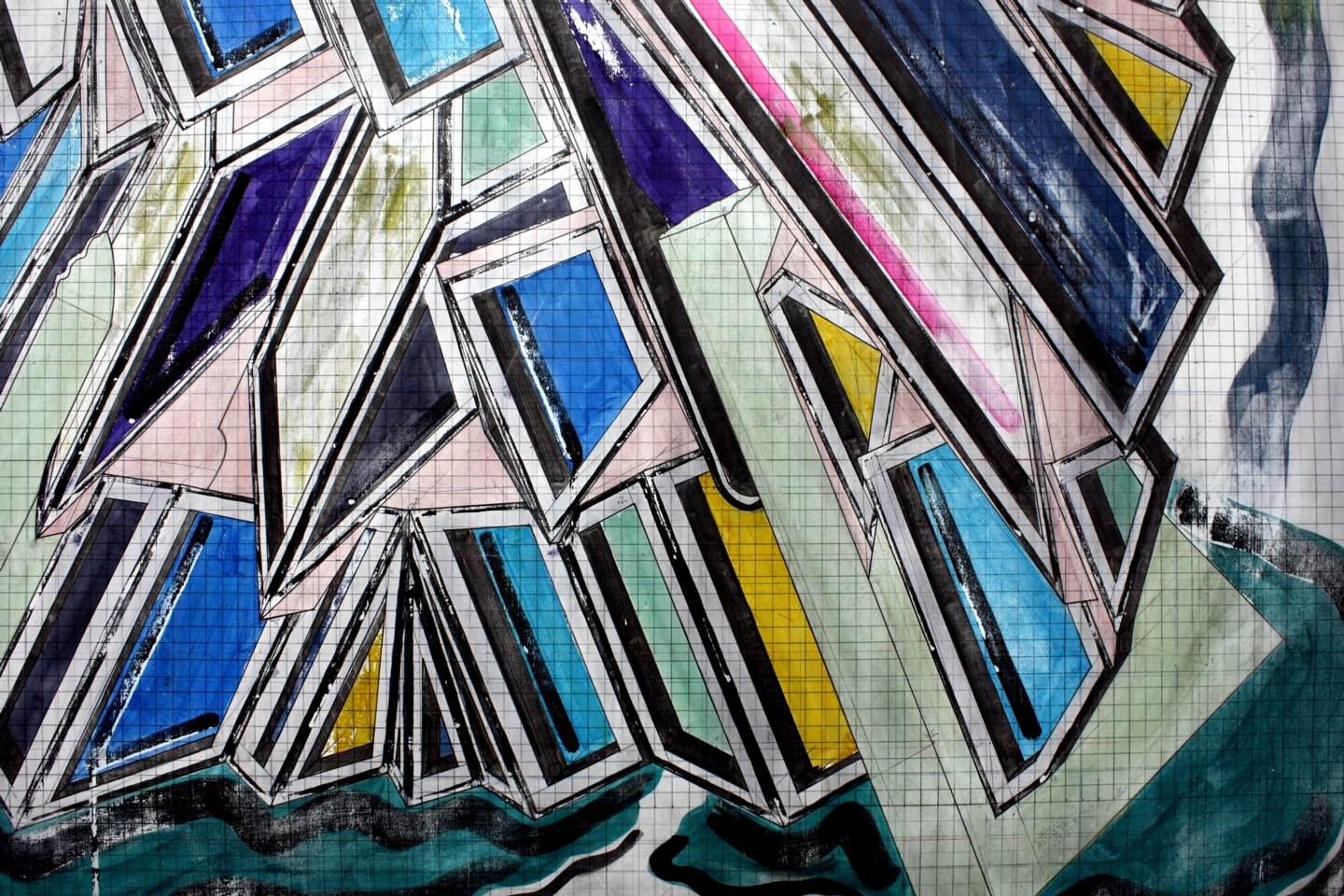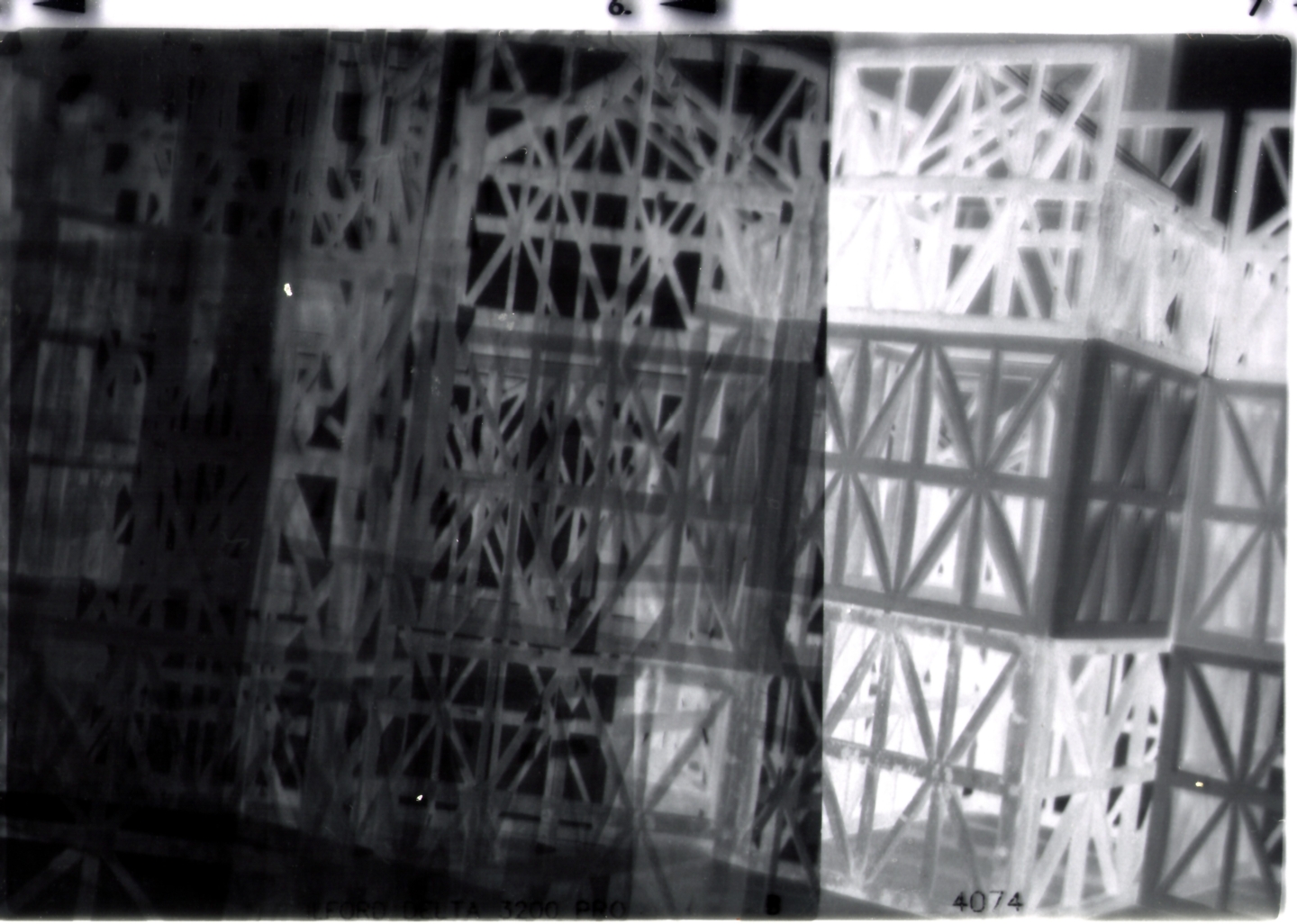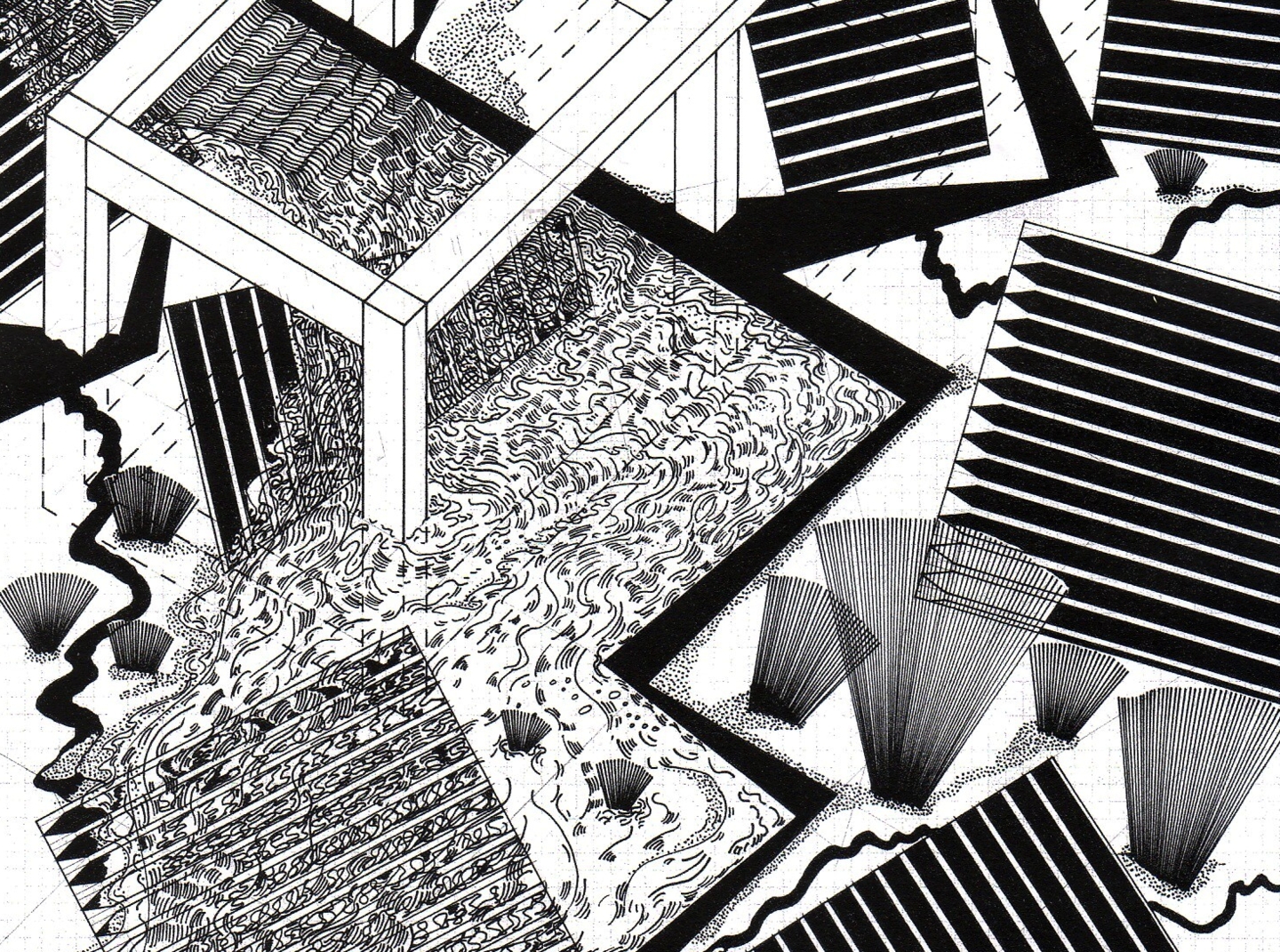
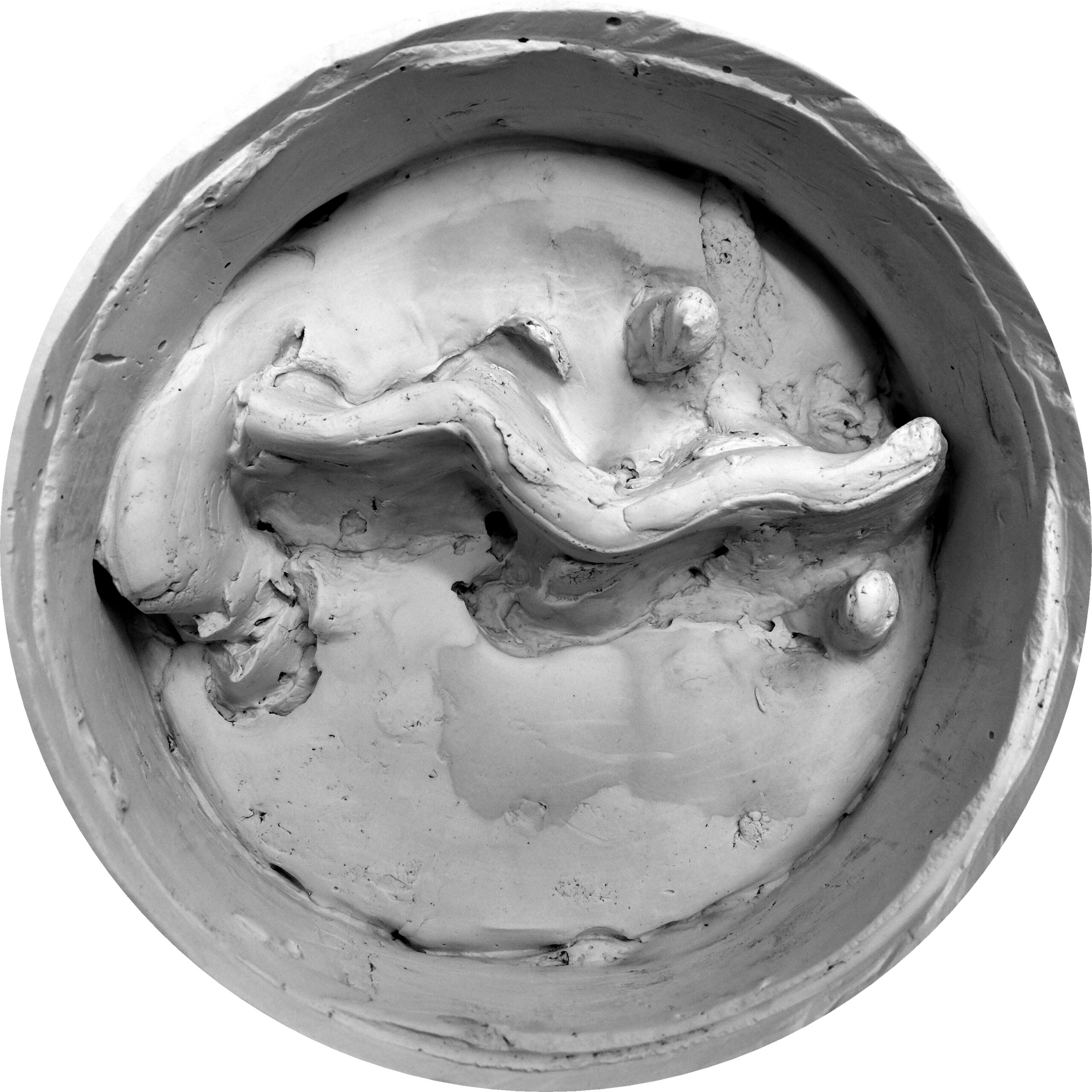
Cast of a clay drawing made in response to moving through the forest blindfolded.
The work listed under “Perceptual Ecology – Forest Work 1” was made as part of my Doctoral Research Project “Embodied Blindfolded Navigation as Perceptual Ecology – The Re-markable Space of Poetic Form” (2019-2023). That project employs non-visuality, in this instance through blindfolding, as a generative constraint, loosening the link between, on the one hand, the time, space and materials of reading and writing, and on the other, the visual and conceptual categories of language. The forest was chosen for its relatively unmarked environmental make-up, enabling greater potential for re-writing experience than, for example, a city space that has more pre-established sensory markers.
Arriving at the edge of Epping Forest, London, I would enter the forest blindfolded. Accompanied by a sighted interlocutor we would dialogue using language that emerged from the activity, impressing on the activity the weak (Vattimo) logic of its own development. Rather than language becoming meaningless through this process, the meaning of language is gradually rebuilt through navigating blindfolded in relation to the specificity of the forest site and the temporality of the encounter.
The work categorised under Forest Work 1 is concerned with materialising the disruption to the perceived logic of experience by highlighting the strain on mental processing under the prescribed conditions. It does this through a creative use of repetition, prosody (the rhythm and intonation of speech), and the subversion of expectation – particularly in relation to binary decision making such as yes and no, right and left. In EF 1 & 2 (bottom of the page) these decisions are recorded through the creation of clay and sand paper drawings, a process that retains the levity of many of the forest encounters by translating them into ambiguous abstract/coded marks and forms. Whilst these marks proved an apposite way to record a forest walk for recall by the person that made them, there non-transferability ultimately pushed the work towards the use of more universal language forms.
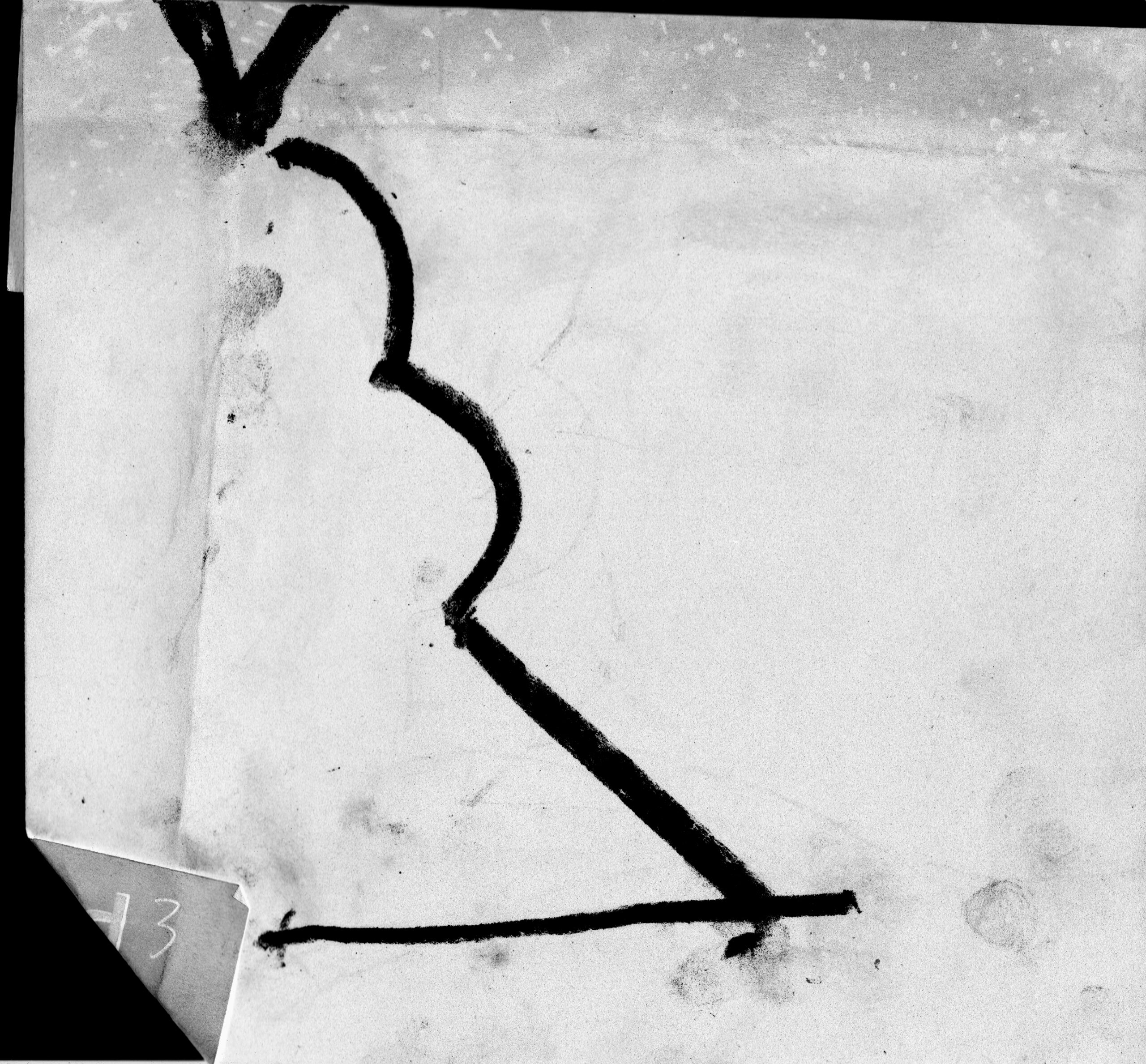
Sandpaper drawing made in response to moving through the forest blindfolded.
Two of the works (Generative Constraint and the Site of Language…) explore the relationship between the work’s enabling constraints and literary form – specifically the way the rules of a narrative determine what is possible inside its space. This relationship plays out across both the content and the form of the document’s, with the later subject to a computational delivery that hovers on the edge of unravelling, breaking down, not keeping up; a lag that is accentuated when delivered as performative presentation – the original format of the work.
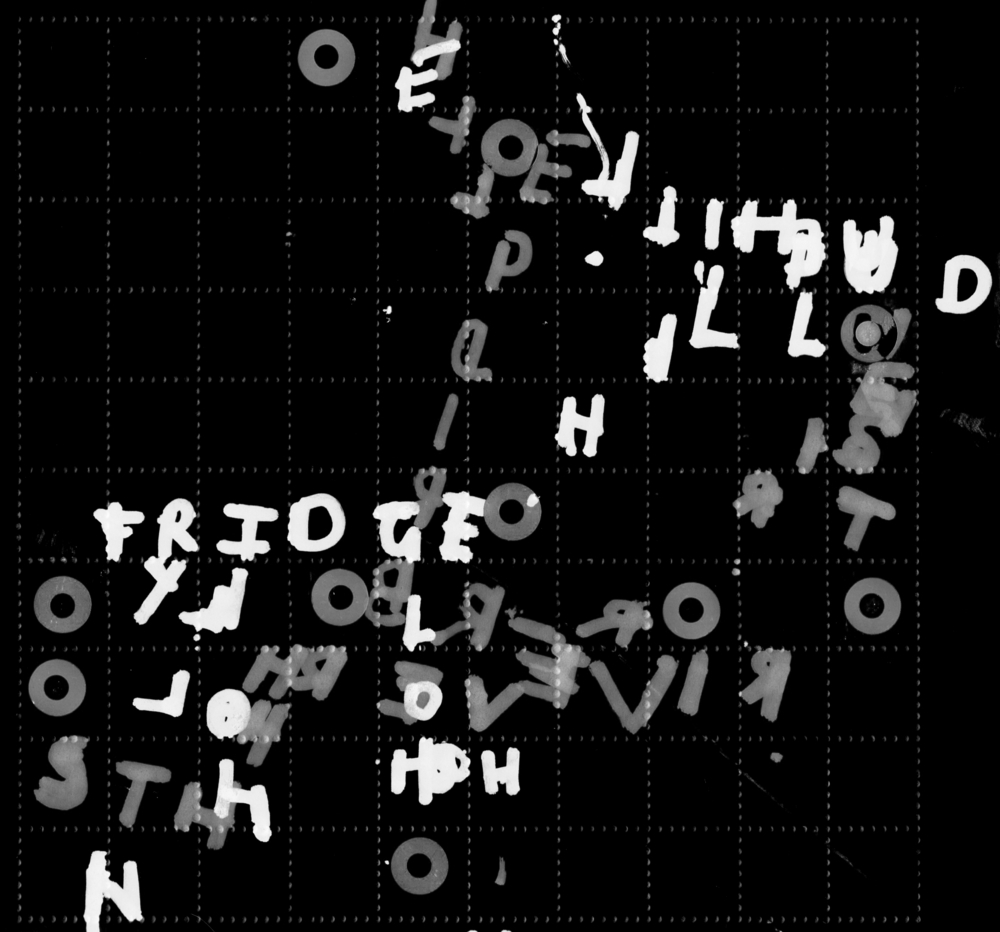
RETAINING THE OBJECT IN THE ABSENCE OF VISION: TRANSLATION AND RE-PRESENTATION IN THE WRITING OF ROBERT SMITHSON AND KENNETH GOLDSMITH sees the beginning of the use of citation as a tool for arranging sensory encounters. It is also the first videographic work in that it reconstitutes a material artifact from the forest – the blindfolded word drawing – as a digital animation. In doing so, the video makes a connection between the weak logic of the forest experience, citational practices, and the structuring principles of the video.
The animated word drawing’s demonstrate an apparently haphazard arrangement of textual material (a mix of sensory information, citational material, reflection on location) the legibility of which repeatedly rises and retreats in line with the forest exploration, raising doubts over the applicability of words to capture the experience. And yet sense is made through the drawing’s construction both in the forest and in the video, insinuating an ulterior functionality to words as markers of space, placeholders, or site-responsive landmarks.
Work appears below in reverse order – most recent first.
RETAINING THE OBJECT IN THE ABSENCE OF VISION: TRANSLATION AND RE-PRESENTATION IN THE WRITING OF ROBERT SMITHSON AND KENNETH GOLDSMITH
GENERATIVE CONSTRAINT AND THE SITE OF LANGUAGE: RETAINING THE OBJECT IN THE ABSENCE OF VISION: AN EXPLORATION OF ROBERT SMITHSON’S ‘INCIDENTS OF MIRROR-TRAVEL IN THE YUCATAN’, THROUGH TWO BLINDFOLDED EXPLORATIONS OF THE SAME PART OF THE SAME FOREST, POSSIBLY.
A PRESENTATION CONSISTING OF DIGITAL SLIDES, TEXT, AND FILM AND PHOTOGRAPHIC FRAGMENTS.
GENERATIVE CONSTRAINT AND THE SITE OF LANGUAGE: RETAINING THE OBJECT IN THE ABSENCE OF VISION: A DIALOGUE BETWEEN GEORGE PEREC’S ‘LIFE A USER’S MANUAL’, AND A BLINDFOLDED EXPLORATION OF A FOREST.
A PRESENTATION CONSISTING OF DIGITAL SLIDES, TEXT, AND FILM AND PHOTOGRAPHIC FRAGMENTS.
EF, SCENE 2, OPTIONS 1-5
EF, SCENE 1, OPTIONS 1-5